VERDE SHMONEY
[EN] SCHMONEY GREEN
COMPENDIO
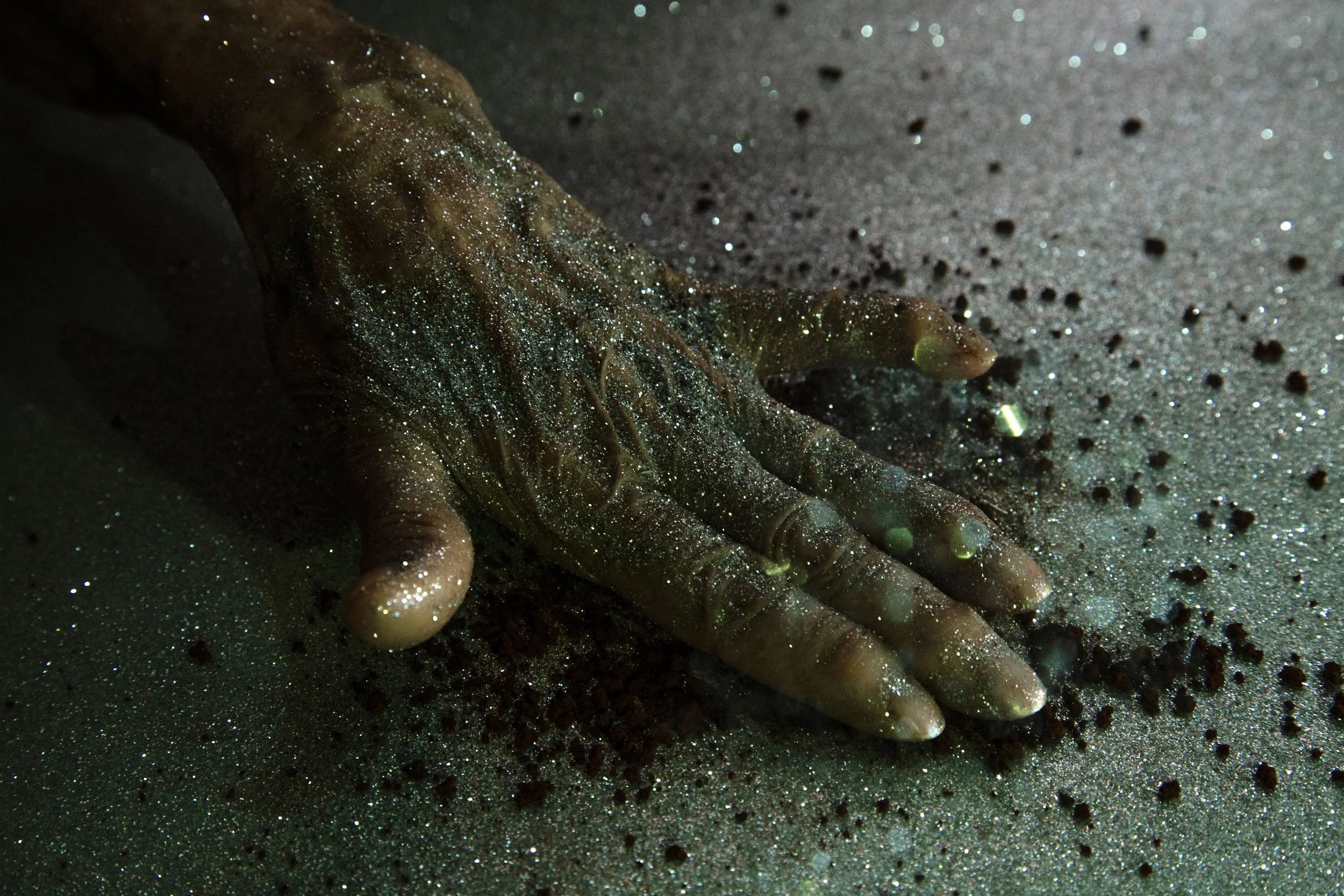
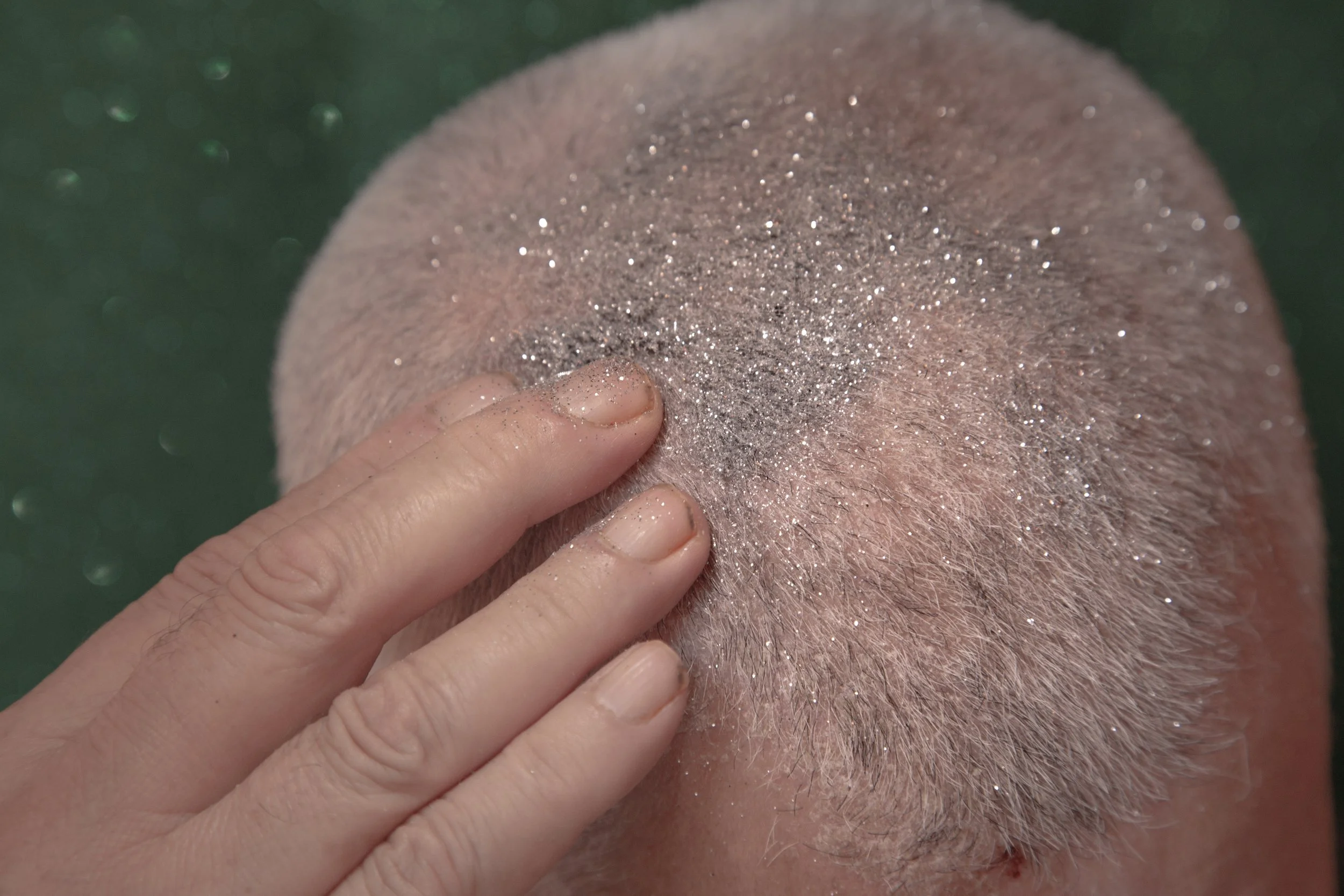
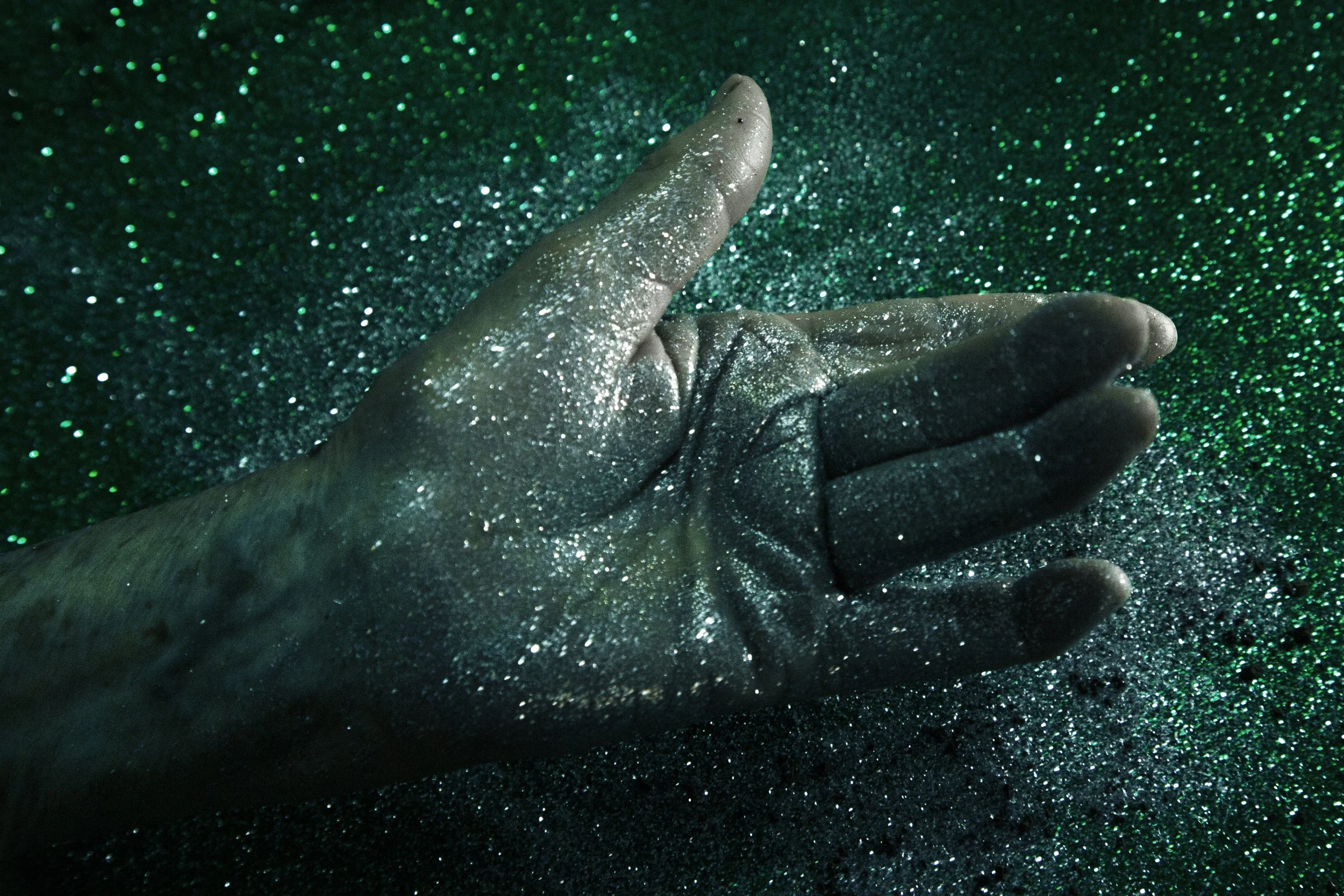
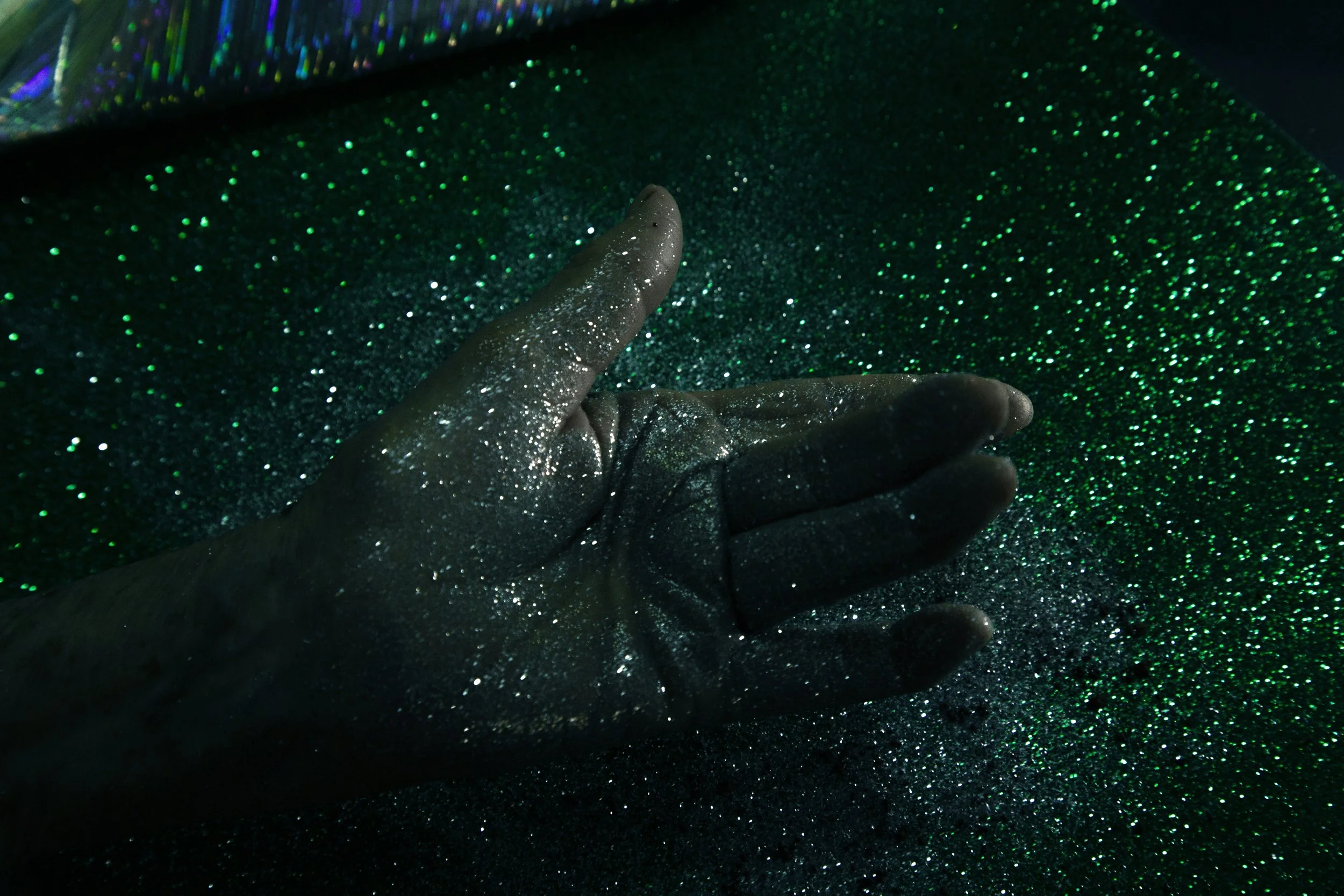
Para Vogue, el verde es tendencia en 2026, según el artículo El color verde es tendencia de 2026, ¿cómo llevarlo de forma elegante?, donde la autora nos invita a adoptar un look con este color. El «verde schmoney» es un color especialmente difícil de lograr en el mundo del maquillaje, proviene de la mica, que le da el efecto brillante al maquillaje, mineral extraído de minas por comunidades explotadas en países como Madagascar e India.
Deseo indagar en las razones por las que algunas personas encuentran en el maquillaje un acto de bienestar dentro de contextos sumamente hostiles, porque es ahí donde presiento la necesidad más profunda y honesta de un acto que se ha calificado como no esencial, meramente femenino y hasta superficial. El proyecto se basa en la investigación de técnicas de creación de tipo «fakeup».
Pero el proyecto también exige hablar de las dicotomías del maquillaje, pues es imposible no mencionar que atravesado por el capitalismo, el extractivismo y la colonización, es también una imposición social, cultural y un negocio que ha explotado humanos y no-humanos.
Este proyecto presenta la búsqueda del maquillaje como símbolo que se desdobla entre una aparente pulsión expresiva y el sistema socio-económico y político que la mercantiliza. Así como la necesidad de tener en cuenta la violencia aparentemente lejana que guarda un ritual tan cotidiano como maquillarse…
OVERVIEW
According to Vogue—specifically in the article "Green Is the Trend for 2026: How to Wear It Elegantly?"—green is set to be a key trend in 2026, with the author encouraging readers to embrace looks featuring this color «schmoney green» is a particularly difficult shade to achieve in cosmetics; it relies on mica—a mineral that provides a shimmering effect—which is extracted from mines by exploited communities in countries like Madagascar and India.
I wish to explore why some individuals find an act of well-being in makeup, even within deeply hostile environments. It is precisely in these contexts that I sense the most profound and honest need for a practice often dismissed as non-essential, "merely" feminine, or even superficial. The project is based on the research of «fakeup» techniques of creation.
However, this project also necessitates an examination of the dichotomies inherent in makeup. It is impossible to ignore that, shaped by capitalism, extractivism, and colonization, makeup functions as a social and cultural imposition—a business that has exploited both human and non-human beings.
This project investigates makeup as a symbol that oscillates between an apparent drive for self-expression and the socio-economic and political system that commodifies it.
As well as the need to take into account the seemingly distant violence inherent in a everyday rutual as applying makeup…